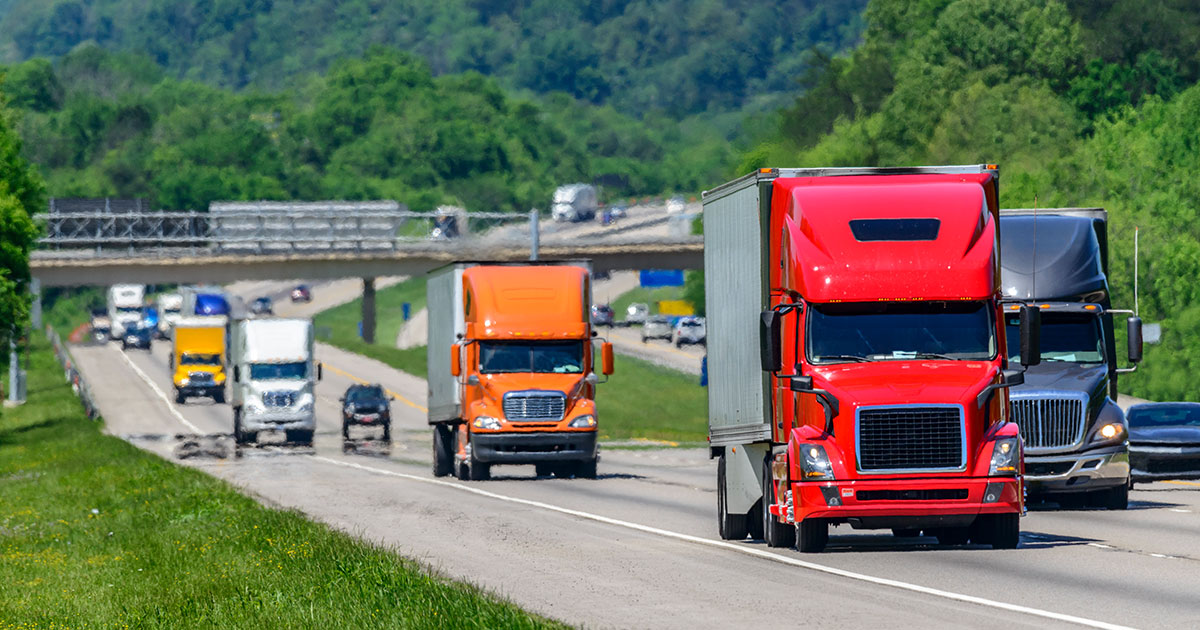
Many Americans are understandably frustrated when traffic delays their commute to their workplace. But for truckers, the road is their workplace.

Chris Spear
President & CEO, American Trucking Associations
For truckers, congestion is not a temporary inconvenience; it is a serious, persistent challenge that has major implications for our supply chain and our economy. Unfortunately, it is only growing worse.
To put this problem in perspective, the cumulative hours that professional drivers waste in traffic are the equivalent of 436,000 trucks sitting idle for an entire year. Interminable slowdowns make it much more difficult for truckers to fulfill their essential role of delivering over 72% of the nation’s freight. Consumers also pay the price. According to the latest research by the American Transportation Research Institute, bottlenecks add over $100 billion annually to the cost of transporting the goods that Americans depend on.
In 2021, Congress made a meaningful attempt to address this issue. The Bipartisan Infrastructure Law authorized historic investments in our transportation network as part of a concerted effort to reverse years of neglect. While this infusion of money was instrumental in helping many vital projects get off the ground, the law has since been overtaken by inflation. After accounting for higher charges for labor and materials, we are actually spending less today on roads and bridges than we were before the law’s enactment.
Prioritizing physical infrastructure, expanding capacity, and reinvigorating our transportation system benefits every American. These steps will not only increase the efficiency of the supply chain but also reduce delays and improve the quality of life for truckers and other motorists.
Investing in a new age of travel
This year, Congress began the process of reauthorizing the nation’s surface transportation programs, with the aim of passing a successor to the Bipartisan Infrastructure Law in 2026. The American Trucking Associations (ATA) and the trucking industry have made clear to lawmakers that eliminating bottlenecks must take precedence.
Congress cannot stop there, however. A new highway bill also provides an opportunity to finally make progress on solving other longstanding transportation issues, such as the truck parking crisis. The current shortage is severe. For every 11 truck drivers on the road today, there is only one truck parking space available.
A lack of parking is consistently cited by truckers as one of their top concerns. In fact, 98% of drivers report regularly having trouble finding safe parking. Far too often, truck drivers are put in the dangerous situation of being forced to park in unauthorized, hazardous locations that not only put themselves in jeopardy, but other drivers as well.
Alleviating congestion and expanding truck parking will require a sustained financial commitment, but the price tag of inaction is simply too high. Unless we make these improvements, productivity and safety costs will continue to mount. As lawmakers ramp up debate over transportation policy and a new federal highway bill takes shape, the trucking industry is urging Congress to take bold steps to usher in a new age of travel. We owe it to our hardworking truck drivers who are on the road every day to keep our country moving forward.
