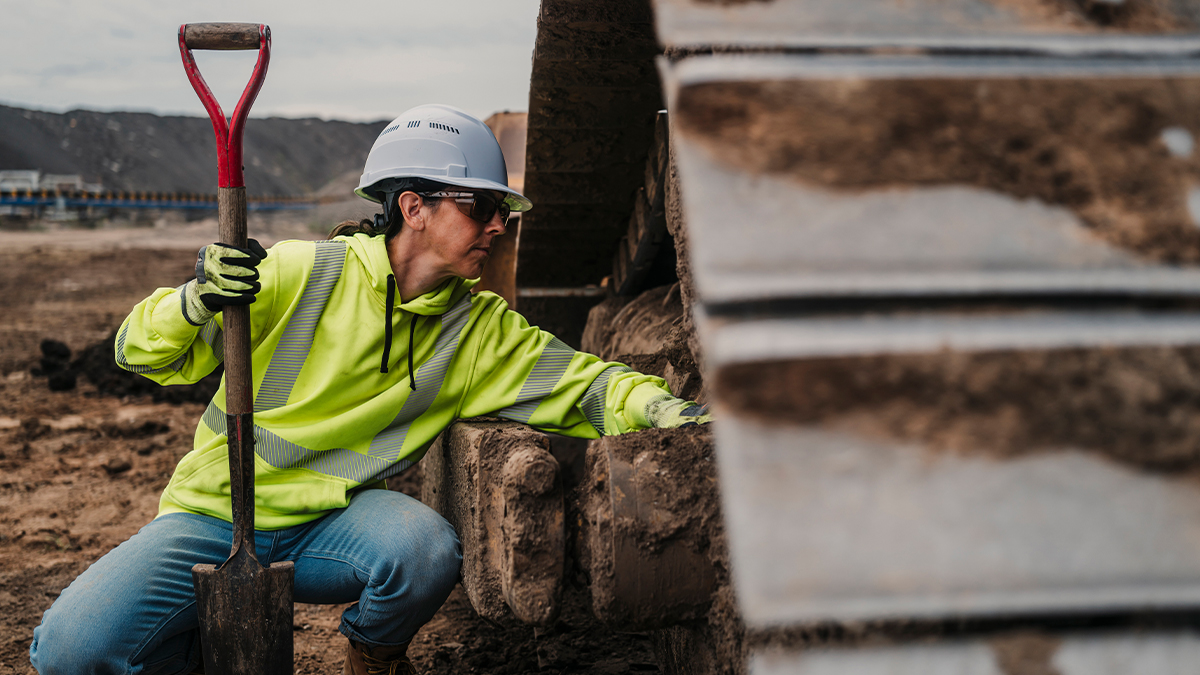

But a failure to listen is putting their safety, psyche and productivity at risk.

Al Buczkowski, QSSP/OSHA 30
Ergodyne
They call personal protective equipment (PPE) the last line of defense. For many — especially women in the trades — it too often defects to the other side, with poor fit causing as many issues as it’s meant to prevent.
Momentum to fix the problem is building, yet the fastest-growing group in the trades still sees the issue treated as an afterthought — by employers forcing a choice between comfort and compliance, and by manufacturers checking a marketing box.
The result: damage that’s physical, psychological, and financial.
“Women are not small men”
Women remain a smaller share of the construction workforce in the United States, but their numbers — about 1 million, per the Center for Construction Research and Training — are far from negligible. Still, many are handed “unisex” gear built for male proportions, sized by weight and height, not shape or movement.
And when their needs are addressed, women are often condescended to with PPE grounded in lazy considerations — like shrinking existing men’s gear and adding pink accents.
“The practice of ‘shrinking and pinking’ must stop,” said longtime safety professional and advocate Abby Ferri in an interview with the American Society of Safety Professionals. “Women are not small men.”
Ill-fitting PPE puts women at a real disadvantage. Loose gear means more snags, tangles, and trip hazards. Seventy-four percent of tradeswomen face unnecessary hazards due to poor fit according to the International Safety Equipment Association (ISEA), citing CPWR data.
“And you want to look the part, too,” said Greg Schrab, Ergodyne President and ISEA Trustee, on the Radio Free Tenacity podcast. “You don’t want to look sloppy or unprofessional.”
Ergodyne — a safety work gear manufacturer and ISEA member — is among several companies working directly with frontline workers and policymakers to advance women’s PPE standards.
Beyond morale, the numbers don’t lie. A National Institutes of Health analysis found 88% of studies on PPE fit showed measurable performance hits — slower reaction times, limited range of motion, reduced endurance, and decreased pulmonary function. In short: bad fit means bad safety and worse productivity.
“We want to look just like everyone else”
Of all PPE categories, high-visibility apparel may be the biggest offender. Through dozens of jobsite visits and hands-on fit trials, Ergodyne product manager Kris Wolle-Wayne did something radical: She listened.
“We just want to look like everyone else — but have it fit us better,” one worker told her.
Women weren’t asking for fashion statements. They wanted gear that worked. Period.
“Nothing special, really,” said Wolle-Wayne. “They just wanted it to do what it’s supposed to do. Because when it doesn’t, it fails the whole idea of safety itself.”
Ergodyne’s journey wasn’t a rush to the finish line. Years of data collecting and conversation resulted in its latest line of 27 hi-vis models delivering thoughtful solutions that will not only fit, but will feel good, look good, and perform better. Wins across the board.
Equity in the workplace takes thought and time. It shouldn’t have to be a special ask –– it’s simply part of creating an inclusive, safe, and productive environment.
