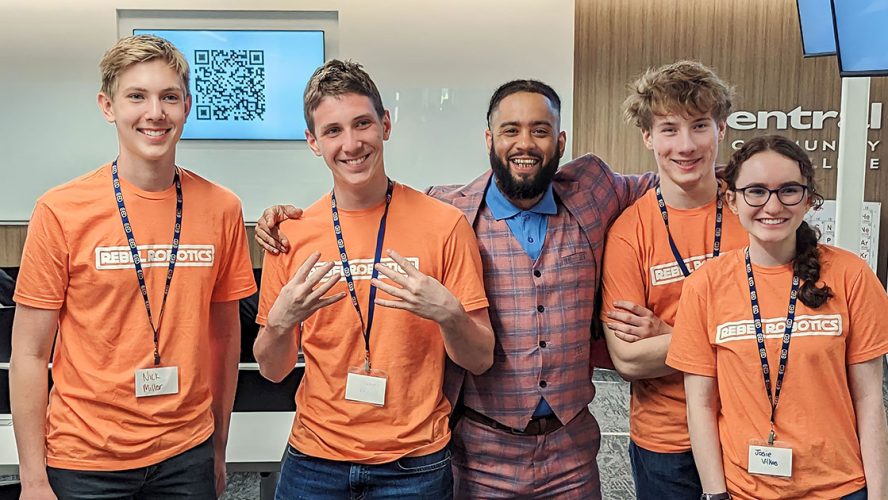
Manufacturing is evolving fast, and workforce expert Andrew Crowe argues that the real constraint isn’t machines, it’s the capability and culture behind them.
Where do you see manufacturing heading over the next decade?
Manufacturing is heading into a gap-widening era where companies that modernize will create opportunity, and those that stay stuck will keep bleeding talent, margin, and relevance. The next 10 years are going to be defined by speed — speed of learning, speed of changeovers, speed of decision-making, and speed of onboarding new people into real skills.
We’re going to see a major reshoring and “right-shoring” wave, not just because of patriotism, but because supply chains got exposed. Lead times, geopolitical risk, and quality control are forcing leaders to build closer to home. At the same time, the shop floor is becoming a data floor. Sensors, connected machines, AI-driven scheduling, predictive maintenance — this isn’t future talk. It’s already here, and it’s about to become standard.
But the biggest constraint won’t be machines. It’ll be people. Not headcount — capability. The winners will build talent pipelines the way they currently build production lines: intentional, measurable, repeatable. That means partnerships with schools, community organizations, and second-chance programs. It means skills-based hiring over pedigree-based hiring. It means training that’s modular, fast, and tied to real outcomes.
The future of manufacturing is high-tech, high-wage, and high-impact.
What role will manufacturing professionals play as technology becomes more advanced?
As technology gets more advanced, the role of manufacturing professionals becomes more valuable, not less. Automation doesn’t replace people; it replaces waste. It replaces guesswork. It replaces the old way of doing things. But it still needs humans to design the process, run the system, troubleshoot the chaos, and improve the output.
The modern manufacturing professional is becoming a hybrid: part craftsperson, part technologist, part problem-solver, part leader. You’re not just running a machine. You’re managing a cell, reading data, understanding quality systems, collaborating with engineering, and making real-time decisions that impact safety, cost, and delivery. That’s not a low-skill job; that’s a high-responsibility career.
We’ll also see a bigger leadership expectation at every level. When machines are connected and production is faster, the cost of a bad handoff or a weak culture gets expensive quickly. So frontline leaders — team leads, supervisors, trainers — become the backbone of performance. The best plants will treat those roles like mission-critical positions and develop them intentionally.
The human element will also matter more as tech increases: communication, accountability, curiosity, and pride in the work. The “soft skills” aren’t soft on the shop floor; they’re the difference between a plant that scales and a plant that stalls.
How could new technology make manufacturing more appealing to young people?
Young people don’t hate manufacturing; they hate the outdated story we keep telling about it. If the only picture they see is dirty, dangerous, and dead-end, they’re going to choose something else. New technology gives us the chance to tell the truth: Modern manufacturing is one of the most advanced, creative, and high-opportunity career paths in America.
When a student puts on a VR headset and runs a simulated weld, programs a robot, or tours a smart factory, something clicks. It feels like gaming, but it’s real life. When they see CNC, automation, cobots, additive manufacturing, and AI-driven systems, they realize this is closer to engineering and esports than it is to the stereotype.

Technology also shortens the runway. Micro-credentials, digital learning, simulations, and skills-based assessments let someone prove capability faster, without waiting four years and going into debt. That matters to Gen Z. They want speed, options, and a clear path to income.
Young people want purpose. They want to build things that matter. Tech helps us connect the dots. Manufacturing powers national defense, clean energy, medical devices, infrastructure, and the products we all depend on. When you show them they can make good money and make an impact, you’ve got their attention.
The key is access and visibility: Bring the tech to the schools, bring the students to the shops, and put real creators — young makers — on camera everywhere. If we market manufacturing like it’s the future, young people will show up for the future.
What trends should businesses in manufacturing watch closely?
If you’re running a manufacturing business right now, you have to watch five trends closely, because your margin probably depends on it.
First: workforce disruption. Retirements, skills gaps, and turnover aren’t “HR problems.” They’re production problems. Companies that build pipelines — schools, apprenticeships, second-chance hiring, internal academies — will outproduce companies that just post jobs and pray.
Second: AI and data-driven operations. Predictive maintenance, quality analytics, scheduling optimization, and real-time visibility are becoming the standard. The shops that win will treat data like a raw material — measured, managed, and improved.
Third: supply chain regionalization. Reshoring is real, but it’s not automatic. Businesses need to watch where demand is moving, where risk is rising, and how to build redundancy without killing cost. Speed and reliability are becoming competitive advantages. Manufacturers need to reconnect with their neighbors and source from their own backyards.
Fourth: customer expectations around customization and lead time. Smaller batches, faster changeovers, and higher complexity mean you need flexible automation and smarter planning. The one-size-fits-all production model is getting exposed.
Fifth: culture and leadership. In a high-tech environment, the cost of disengagement is massive. Safety incidents, quality escapes, missed shipments — those are culture outcomes. Businesses need to develop frontline leaders, modernize communication, and create shops people actually want to stay in.
The trend behind all trends is this: Manufacturing is becoming a talent game and a technology game at the same time. If you only invest in machines, you’ll still lose. If you only invest in people, you’ll fall behind. The winners do both — on purpose.
What excites you most about the future of American manufacturing?
What excites me most is that American manufacturing is waking back up, and this time, it’s not just about making stuff. It’s about rebuilding the middle class, restoring pride in skilled work, and proving that innovation doesn’t only live in Silicon Valley. It lives in shops large and small all across America.
I’m fired up because we have the chance to do something bigger than “fill jobs.” We can build careers. We can build leaders. We can take people who’ve been overlooked — young people, underserved communities, justice-involved talent — and turn that raw potential into high-skill, high-wage, high-confidence professionals. That’s not charity. That’s strategy. That’s how you solve the talent shortage and change lives at the same time.
I’m also excited about the tech. Smart factories, robotics, AI, digital twins — this is a new era. When we combine that technology with American grit, we become unstoppable. We can out-innovate, out-produce, and out-execute if we stop treating workforce development like an afterthought.
But the biggest excitement is the movement. I’m seeing manufacturers, educators, and community leaders finally align around the truth: The future is built by makers. And the next generation is hungry for something real — real skills, real money, real purpose.
American manufacturing doesn’t need a comeback story. It needs a takeover story. And we’re already writing it.
