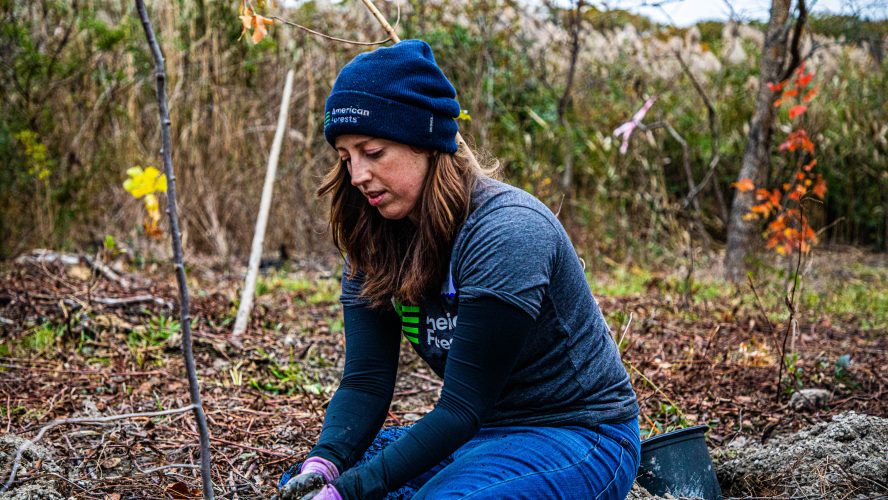
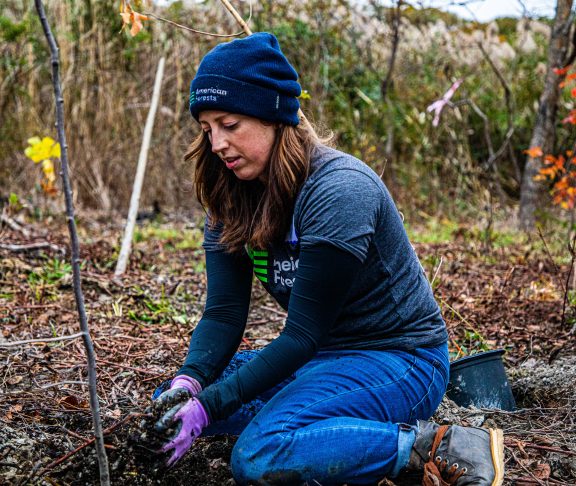
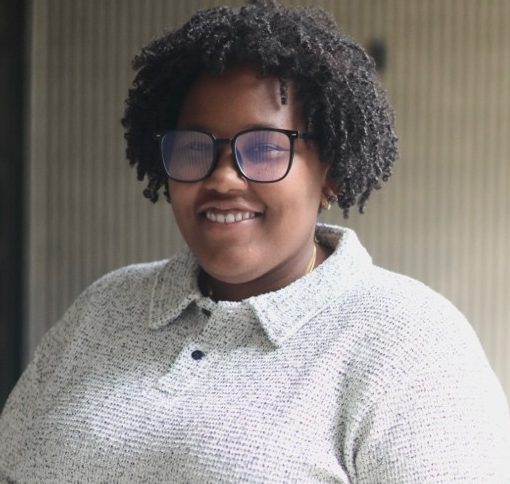
Sally D. Ross
Founder, Black Environmental Prosperity Group; PhD Candidate
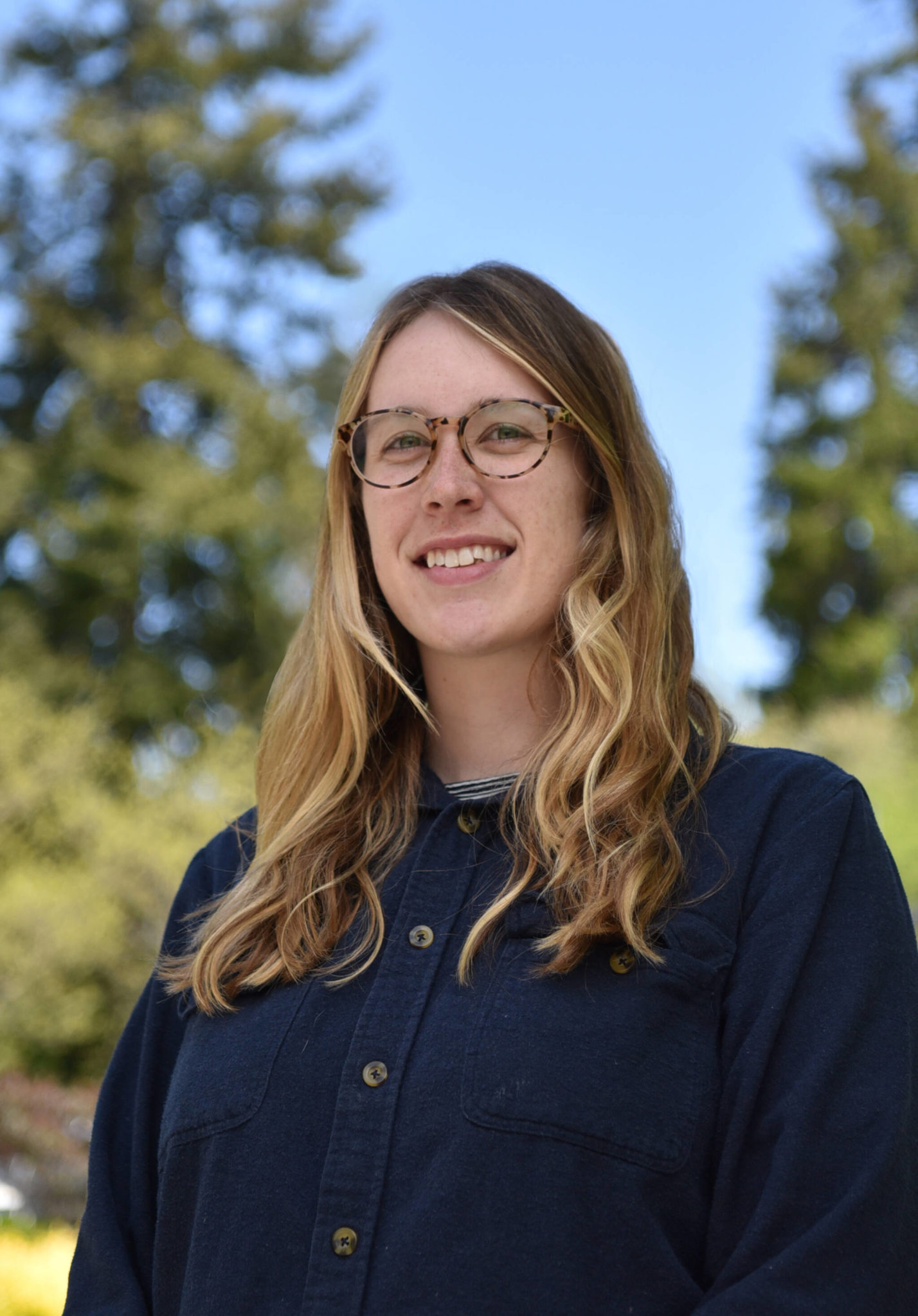
Drue Epping
Director of Pacific Northwest and West Coast Urban Forestry, American Forests; Adjunct Professor, South Seattle College; Chair, Seattle Urban Forestry Commission; Pacific Northwest ISA chapter, Board Member; ISA Board-Certified Master Arborist
As climate change fuels deadly heat and flooding, urban forestry saves lives. Yet women comprise less than 25% of the field, leaving vital solutions untapped.
When Sally Ross, M.S., Ph.D. Candidate, looks back on her childhood in Louisiana, she remembers what was missing. Growing up in a stretch of the state known as “Cancer Alley,” shaded parks and trails weren’t part of her upbringing. For her, recognizing the benefits of green spaces came when she was recruited into Southern University’s urban forestry program.
Meanwhile, over 1,000 miles away in Wisconsin, Drue Epping always felt a connection to trees. She spent her childhood on her grandparents’ property, which was enrolled in the state’s forest program. This experience sparked an early awareness of how landscapes are cared for, which eventually led her to study arboriculture. But when she walked into her first class as the only woman, she hesitated. Did she belong?
Today, both Ross and Epping have carved out successful careers in urban forestry but recognize more needs to be done to bring women into the field.
Why we need more urban foresters
Urban forestry, the practice of tree management in cities, has historically been male dominated. According to Lightcast, a labor market analytics company, only 24% of foresters in the United States are women. Both Ross and Epping know firsthand the challenges of advancing in a profession where you don’t see yourself represented. Epping points to basic things such as ill-fitting safety gear that is often designed with men, not women, in mind. Ross describes the barriers she’s faced as more cultural than technical.
Creating more opportunities for women to pursue careers in urban forestry is critical, given that the industry is facing a labor shortage. There is an annual need for approximately 8,300 tree-industry workers nationwide and more than 158,900 annual job openings in the landscaping industry. In the face of intensifying climate threats, including deadly heat, the life-saving benefits of trees are needed more than ever. Ross and Epping are part of an army of urban foresters dedicated to planning and maintaining this essential infrastructure that contributes to clean air, clean drinking water, heat mitigation, stormwater management and other benefits that keep communities safe and healthy.
“Urban forestry is a bridge between justice and equity,” Ross said. “Where trees are planted, how they are funded, and how they’re cared for all affect community health outcomes.”
Lower-income communities and communities of color often have fewer trees, exposing residents to higher temperatures, increased energy bills, and poorer air quality. Epping is tackling that challenge head on in her role as Director for the Pacific Northwest and West Coast at American Forests, the nation’s oldest conservation nonprofit. She works with local governments and community organizations to advance Tree Equity, a nationwide movement to ensure all people have access to the benefits of trees.
“Trees are critical green infrastructure,” Epping said. “They are a vital part of our city and influence so many things like climate, stormwater, how people feel in a city and how they can survive in a city.”
Expanding access to trees requires a trained and thriving workforce. Epping emphasizes the importance of building pathways into the profession to prepare the next generation of urban foresters. At American Forests, efforts like national summits and partnerships with schools are helping students and early-career professionals see forestry as a viable and meaningful career path.
Forging new paths
Early access to the field through higher education is also important to growing the field. Outside of her work at American Forests, Epping is an adjunct professor at South Seattle College where she introduces students to arboriculture and helps prepare the next generation of urban foresters.
“Most of my students have been women in the classes, which is just very different from when I got in the industry,” Epping said.
Ross’s career also reflects the breadth of possibilities that exist in the field. At the U.S. Forest Service, she worked on grant management, helping direct resources to local projects. Now, she works in the private sector where she takes a more entrepreneurial approach to her work, building partnerships and testing new urban forestry ideas that directly serve communities.
“I’m more of an entrepreneurial person, always looking for that sense of freedom,” Ross said. “When I suggest a partnership or new opportunity, people are open to those conversations.”
Together, their experiences reflect an industry with a variety of career possibilities, but both agree that getting more women into the field requires a cultural shift. Ross described earlier times in her career when she was expected to prove herself more than her peers or asked to carry the added burden of educating colleagues on issues of equity. That kind of responsibility, she says, can be isolating.
Epping echoes the need for structural change. She pointed to hiring practices as a clear place to start. Job descriptions that still use terms like “foreman” or “groundsman” send a message about who belongs and who doesn’t.
“There’s a real need for employers to recognize the importance of diversifying their workforce and to rethink how they advertise jobs,” Epping says.
Looking Ahead
Despite the barriers, there are signs of progress. According to Lightcast, in 2023, men and women completed urban forestry degrees in nearly equal numbers. On the ground, Epping is also seeing people entering urban forestry as a second career. As climate impacts accelerate and the demand for skilled professionals expands, this kind of progress and interest matters.
When it comes to staying motivated amid climate threats, both women point to the future. For Ross, it’s about building a profession that more equitably delivers the benefits of trees. For Epping, it’s about the students she sees weekly, preparing to shape the next wave of urban forestry.
Urban foresters are needed now more than ever. Ross and Epping are stepping up to answer the call and hoping more women will follow, because the opportunities to make a positive impact are tree-mendous.
