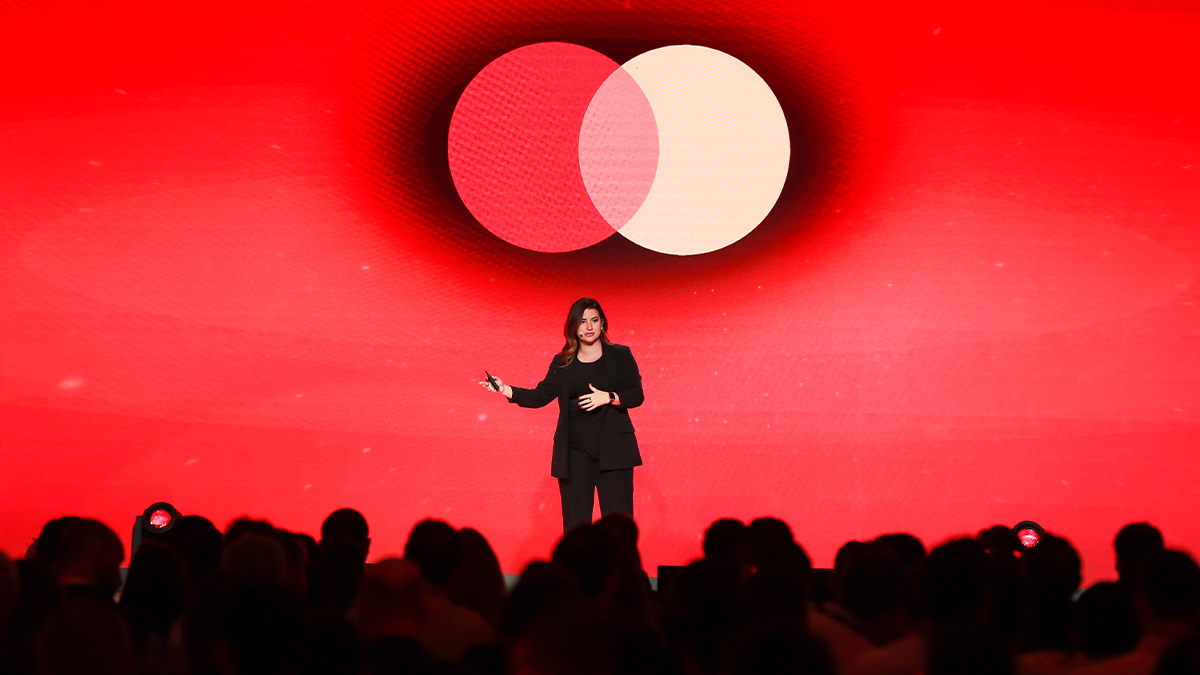

Allie K. Miller, AI business leader and adviser, and former Global Head of Machine Learning for Startups and Venture Capital at Amazon Web Services, describes how to stay ready for inevitable advances that are already transforming both operations and lifestyle.
Note: This interview took place in December 2025.
How do you describe a career in AI to someone who worries that technology may replace their job?
AI is impacting every single role, whether you are working in tech or not. If you are a nurse, if you are a lawyer, if you are a machine operator — every single vertical, every single region is going to be impacted by AI.
For folks who are worried that AI is going to replace them, the first thing to recognize is that AI is replacing tasks right now. And there’s a lot to our job that are not tasks.
There was an Upwork research study in July 2025 where they assigned AI tasks that were normally put on the internet for freelancers, and AI could only complete 2.5% of the total job itself. Obviously that’s shifting, but just because it can take on a task doesn’t mean it can do a whole job.
The second thing I would say is that you have to assume there’s going to be transformation. It’s actually unhealthy to tell early-career professionals that AI is not going to replace their job. There will absolutely be job replacement in the AI age.
The best thing you can do is reorient your work and identity more toward outcomes.
For example, if you are a customer support agent, your task used to be picking up the phone, talking to the person, coming up with answers, and navigating every question. Then AI chatbots helped you get answers faster. Now maybe a chatbot takes on 50-80% of the questions.
Your task becomes handling complex cases, managing the AI process, updating protocols, and making sure trust is maintained with customers.
People who stay outcome-oriented, adaptable, and growth-focused tend to be much less afraid.
What emerging roles around AI do you think people are least aware of right now?
The go-to answer is probably AI operations or AI operator, but the honest answer is that we still don’t know. Every job is still getting figured out.
I do think AI operations is a real role. I’ve already seen multiple Fortune 500 companies hire for it.
One idea I recommend for companies is building a cohort of around 30 “Swiss-Army-knife” AI operators who understand how to build and work with AI agents and can be deployed into different departments.
We’re going to have a lot more utility players — switch-hitter AI operators who are fairly technical and can move between project teams.
We’re also going to see blurrier job titles. Jobs may fall into three categories: product (engineering and design), field (marketing, sales, customer support), and operations.
AI enables people to do tasks outside their traditional specialty. For example, I coded something last night that would have taken a developer weeks in 2022. I did it in about an hour.
Generalists and builders are going to have a big advantage in 2026 and beyond.
What skills or experiences matter most for building long-term careers alongside AI?
There was a research paper out of Northeastern that had people solve problems on their own and then paired them with AI. They found that your ability to collaborate with AI is a fundamentally different skill from working solo — and the thing that best predicted who thrived with AI was theory of mind, your ability to model what the AI knows and doesn’t know. That had almost no relationship with how smart you were on your own.
The skills I’d emphasize are a strong sense of wonder, agency and experimentation, and adaptability. These models improve every week. If you’re still using AI like you did in 2023, you’re not equipped for what’s possible today.
The best experience you can get is simply testing AI tools. There are two types of users: surface users and super users. Surface users use AI like Google. They ask for recipes, travel plans, and quick answers. Super users reinvent workflows. They redesign processes. They burn things down and rebuild them. Super users rethink entire systems rather than just adding AI to existing processes.
What questions do students or early-career professionals ask that reveal how they’re thinking about the future of work?
Interestingly, most generations ask very similar questions: What skills do I need? What’s the best AI tool? How do I solve this problem? How do I reinvent myself?
The difference is how they approach workflows.
Gen Z tends to think in small, fast, project-based teams, while older professionals often think in larger – and slower – organizational structures. Gen Z also isn’t burdened by legacy workflows. They ask questions like, “Why are we doing it that way?”
That fresh perspective can drive reinvention, while millennials and Gen X provide deep subject-matter expertise. The best companies combine both.
How have your career experiences shaped your perspective on access and who feels empowered to pursue AI careers?
What gives me hope is how AI is improving across four parameters: scale, cost, performance, and accessibility.
Accessibility excites me most. Anyone with internet access can use the best AI models. I recently spoke with a 62-year-old woman whose 83-year-old mother uses AI every day. She’s using it for financial planning, building websites, and talking to it in voice mode. The woman’s sister who is the same age as her refuses to use it. It has nothing to do with age or intelligence. It’s about mindset.
The downside is that most people use AI for productivity rather than life improvement. But AI can help with things like education, financial advice, therapy, and healthcare questions.
It has the potential to dramatically expand access.
What advice do you give professionals who feel late to AI?
I go back and forth between reassuring people they’re not too late and being honest that we’ve been saying that for three years. If someone still hasn’t tried these tools, something isn’t clicking.
One suggestion is to form small AI discussion groups — maybe six people sharing use cases and challenging each other.
Another simple starting prompt is: “I’m a ___ and I want to try ___. Interview me about this problem until you’re 95% confident you can help me solve it.”
Then have a long conversation with the AI. Push back, correct it, experiment. Develop what researchers call “theory of mind” — understanding how the AI thinks. Use AI for at least 100 hours. That’s when the shift really happens.
What gives you confidence that AI will expand opportunity rather than limit it?
Of course, accessibility is improving, so less technical users can reap the benefits. And AI is becoming more ambient — it’s not just on our laptops, it’s in our cars, on our phones, in our meetings. Another big shift coming is proactive AI. Instead of us prompting the AI, the AI will prompt us. It might ask about our day, offer to join team calls, flag schedule conflicts, suggest when we should take time off, or identify patterns in our work.
Right now, the burden is still on the user to ask questions. Proactive AI will help people who don’t even know what questions to ask. We’re already seeing early versions at expensive tiers, but proactive AI and ambient AI in software will explode in 2026.
