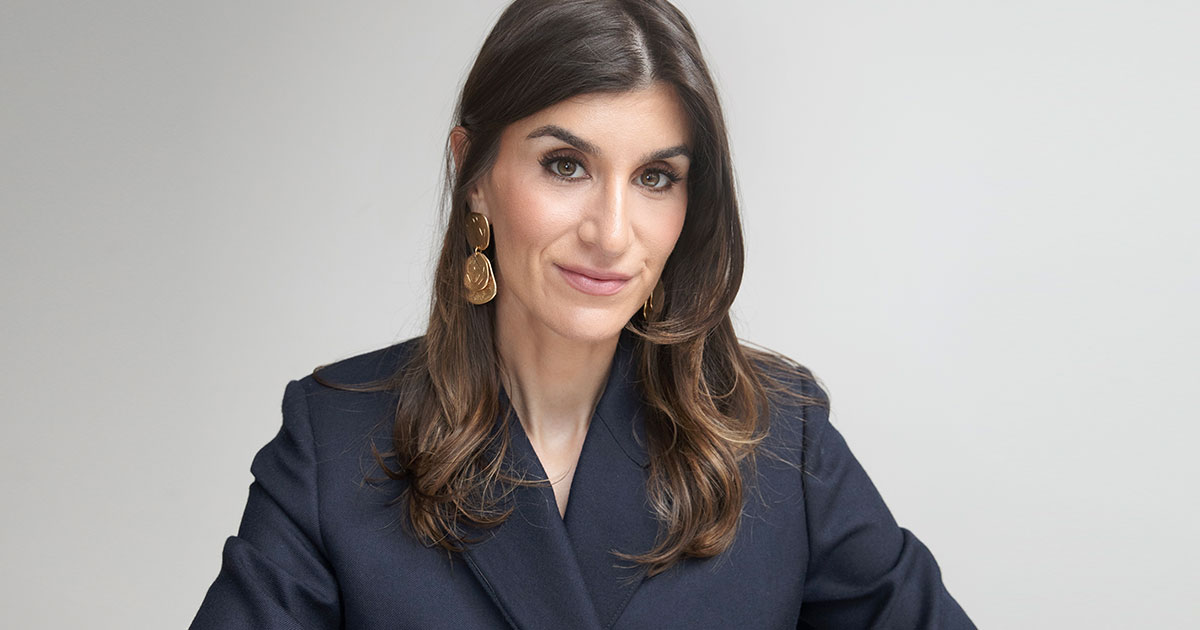
Haley Sacks, the creator known as Mrs. Dow Jones and author of “Future Rich Person,” wants to break down the gatekeeping around personal finance.
What first drew you to the world of finance, and how did that eventually lead you to creating Mrs. Dow Jones?
What drew me to the world of finance initially was, I think, shame and embarrassment at the core of it. I grew up on the Upper East Side. My dad works at Goldman Sachs — he’s worked there for 40 years — and I was always surrounded by money, by privilege, by wealth. But I had no idea how it actually worked. I wanted to talk about it, but I had no idea how to grow it or even keep it.
At the same time, I could tell you everything about pop culture, celebrity fashion, and Bravo, but I had no idea what a 401(k) was or how to budget. I think at the core, Mrs. Dow Jones is a fascination with that gap, because finance is one of the most, if not the most, powerful forces in the world, but most people are locked out of the conversation, even if you have as much proximity to it as I did.
I really created Mrs. Dow Jones as a way to translate money the same way that people talk about pop culture. Once you explain the market and investing and budgeting and tax hacks the way that people are already talking about things in their lives, like celebrities, then people start to realize that they’re not actually bad with money. It’s just that the system was never explained to them, or if it was, it was explained badly with a lot of jargon.
What barriers do you think still discourage women from pursuing careers in finance?
I think that, overall, the culture still feels like a private club. I mentioned the jargon. There is just this energy around Wall Street that really feels like us versus them. The industry still runs on a lot of insider language and networks and privileged confidence, and that can be really hard to break into.
If you didn’t grow up around that, then maybe you could already feel like you’re behind, especially as a woman. A lot of it also has to do with how women are socialized. Men are taught to take risks, to invest, to negotiate. Women are taught to save, to coupon.
We’re taught that we’re really frivolous with money, that we love to buy the latte and, oops, we fell and we got a gel manicure. But no one talks about men’s sports betting or gambling or all these things that men spend money on. It’s not really in the conversation in the same way that women are policed for that.
What’s also so crazy is that all the data shows that when women do invest, we’re better at it, but it’s just about taking that leap. We lose more money to the investing gap than we do to the gender pay gap. There’s a huge day dedicated to the pay gap, but we need a day dedicated to women getting their money in the market, because it’s not that hard or complicated. We’re just never taught to do it, so it feels really scary.
What changes would you most like to see in the finance industry to improve representation in leadership roles?
I think that we need to stop pretending finance is just for people who studied finance. Some of the smartest investors or speakers around money come from other fields. I studied film, and it’s just about finding the right voice.
I always talk about it like an exercise instructor: You have to find the one that works for you. I think we need to be more open to people who are coming from psychology or journalism or tech or even comedy, because markets really are about human behavior. It’s about people who can analyze that and break it down.
I also think that we just need more diverse thinking. We need women. We need people of different backgrounds. We need fewer white men in these leadership roles, because they’re only looking at the world through one perspective.
Money touches everyone, especially women who understand how money actually affects everyday life. In most households, women are in control of the budgets. They’re the ones moving money around in the economy and know what consumer trends are like. A lot of female investing psychology is based on noticing behavior, what your kids want, what you want, and investing in those companies. Just noticing those behaviors and making financial decisions around them can lead to growing wealth.
Right now, finance is run by people who are making spreadsheets, but it needs to be run by people who understand people, women who understand women, people of different backgrounds who understand different experiences. It’s important to have more diversity in leadership.
What role does financial confidence play in helping women pursue opportunities in investing or financial services?
I really feel like confidence is everything, because most women aren’t less capable with money; it’s just that they are less confident with money, because they’ve never been taught or empowered to learn.
That confidence is what gets you to ask for a raise. It’s what gets you to open a brokerage account. It’s what gets you to leave a bad relationship that’s keeping you down. It’s what gets you to negotiate a deal or create your own company or apply for a job that you’re technically not qualified for yet.
One of my favorite stories is about the first woman to have a seat on the New York Stock Exchange, Muriel Siebert. She was super confident and told a little white lie to get that seat and ended up making history. Not to say you need to lie, but being bold is what moves you up in the world.
Women are taught a lot more to be polite, and that is very dangerous. Meanwhile, men apply for jobs with only half of the requirements, and no one blinks an eye. Financial confidence can really change your full life trajectory, because money allows you to control your time and your choices and gives you freedom.
How can women from nontraditional backgrounds find a path into the finance world?
Like me, you just have to ignore the idea that you need permission. You don’t. And the secret is that it’s not that hard. That was the most eye-opening part of becoming Mrs. Dow Jones. We’ve been completely catfished.
It’s all jargon, suits, flashy buildings, and men in vests, but at the core, it’s very simple to grow wealth. We really overcomplicate it, and we think we need permission, and we don’t.
The internet has been an amazing resource because it broke all of the gatekeeping around finance. Years ago, I would have needed to work in a bank to do what I do. Now I can do it on the web, reach so many people, and I don’t need anyone to sign my checks. I sign my own checks.
You can learn investing and personal finance from your phone. I still think the best way to learn is through reading. Finance books are so impactful, and that’s why I wrote mine.
The most powerful thing you can do is start by managing your own money. I always encourage people to have a money date. Once a month, you sit down, review your budget, your spending, and your income, and that builds confidence.
I also reframed my mindset. I thought finance would be boring, but once I worked around that, I realized I was naturally engaged. Try reading an article in The Wall Street Journal or Bloomberg and see if it clicks.
How the markets move explains the world. You’ll see a store close and, instead of just missing it, you’ll understand why. It helps you understand how everything moves, and that’s very compelling and addictive.
What lesson from “Future Rich Person” do you hope stays with women long after they finish the book?
The biggest lesson is that they are not bad with money. Most people think their financial problems stem from a personal failure, and in reality, it’s just that the rules and the economy have changed, but the advice didn’t, or you never got it. That’s why “Future Rich Person” is so important. It teaches a new set of rules for building wealth in 2026, in the world of student debt, AI, inflation, and economic uncertainty.
Once you understand those rules, money stops feeling so intimidating and starts feeling like a tool. That’s what’s so amazing about it: You can use it to build whatever life you want. That shift really changes everything.
