

Women leaders who reached the C-suite through unconventional paths share what they learned and how any woman can earn her space at the table.
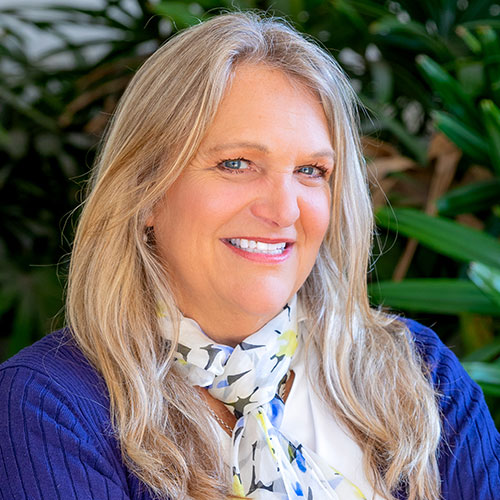
Heather L. Cole
Founder and CEO, Heatherized, Inc. and Lodestar Solutions
There is no single road into the executive ranks of American finance. Some are paved with accounting degrees and audit trails. Others begin in classrooms, on sales floors, or, in at least one memorable case, at a street vendor’s cart. However, nearly all of them run through the complicated, beautiful terrain of a full life: families, setbacks, reinventions, and the daily negotiation between ambition and everything else that matters.
That is the point Financial Executives International (FEI) is making with its ICONS: Leaders in Finance annual event and companion “FEI Podcast: Icons Edition,” a platform dedicated to amplifying the voices of women who have risen to the top of financial leadership. Through candid conversations, these executives reveal what a career in finance can actually look like: nonlinear, hard-won, and deeply human.
Grit is a skill, not a given
Judy Wright, chief financial officer at BTM Global Consulting and an FEI board member, did not begin her career behind a spreadsheet. She built resilience the hard way and carries that foundation into every boardroom. Wright describes grit not as a personality trait you either have or don’t, but as a competency cultivated deliberately. She also speaks openly about the tension high-achieving women face between professional ambition and personal sustainability, and why leaders who invest in self-development and relationships, not just task execution, are the ones who endure.
Patti Humble, former chief accounting officer at UPS, reframes career progression as a jungle gym rather than a ladder, a structure you can climb sideways, diagonally, and sometimes down before going up. Her advice: Ask. Ask for the stretch assignment, the promotion, and the space to recharge. Career advancement, she argues, comes from intentional courage, not passive excellence or quiet sacrifice.
Integration over balance
Muneera Carr, executive vice president, chief accounting officer, and controller at Wells Fargo, is candid that “work-life balance” can be a misleading standard for senior leaders. Instead, she emphasizes integration, making intentional choices across career and life stages, and applying the same discipline to people leadership. Throughout her career, Carr has made pivotal decisions shaped by family, parenting, and personal circumstances, trusting that her career would evolve alongside those choices. She defines leadership as the ability to lead people through change and uncertainty with empathy, clarity, and discipline. That human-centered approach builds trust, drives performance, and sustains leaders over the long arc of a career.
Catherine Hoovel, former senior vice president and controller at McDonald’s Corporation, connects sustainability to purpose. Drawing on nearly three decades at the executive level, she argues that leaders who articulate their long-term aspirations — and deliberately design their lives around them rather than just their job descriptions — are better equipped to handle the demands of the C-suite. Hoovel also addresses life after a big title, making the case that planning that transition with intention is itself an act of leadership.
Visibility as a mission
FEI’s ICONS initiative is more than an event or podcast series. It is a deliberate commitment to visibility, rooted in the understanding that young women will pursue the paths they can see. By featuring executives who navigated real obstacles, took unexpected turns, and built full lives alongside demanding careers, FEI offers the next generation something invaluable: proof that there is room for them at the table and a community ready to help them get there.
As Humble puts it, “Ask for what you need to do your best work, including the space to recharge.”
